
Business Operation · 2025
In this section22 topics
- Corporate Information4 items
- Dividend Policy2 items
- Major Shareholders1 item
- Business Strategies Overview6 items
- Material Changes & Developments1 item
- Use of Proceeds from Securities Offerings1 item
- Commitments Made in the Registration Statement1 item
- Group Operating-Structure Policy1 item
- Companies Where the Company Holds ≥10%1 item
- Shareholders with Potential Conflict of Interest1 item
- Relationships Among Major Shareholders2 items
- Shareholders' Agreement1 item
- Shareholding Diagram (Group Structure)2 items
- Income Structure3 items
- Product / Service Characteristics2 items
- Research & Development6 items
- Assets Used in the Business4 items
- Marketing Policy & Competition3 items
- Procurement of Products & Services6 items
- Projects Under Construction1 item
- Debentures & Bills of Exchange1 item
- Convertible Securities1 item
Corporate Information
Company Name
POSCO-THAINOX PUBLIC COMPANY LIMITED
Telephone
0-2494-3130-47
Website
www.poscothainox.com
investorrelations@poscothainox.com
Dividend Policy
Dividend Policy
The Board of Directors may consider distributing dividends from the company’s profits, subject to approval by the resolution of the shareholders’ meeting. Additionally, the Board may declare interim dividends from time to time if it deems that the company has sufficient profits to do so. Prior to dividend distribution, the company must allocate at least 5% of its net profits as a legal reserve until the reserve reaches 10% of the registered capital. Furthermore, the Board may propose to the shareholders’ meeting to allocate additional reserves as deemed appropriate for the company’s operations.
The company has a dividend policy of paying no less than 50% of its net profit after tax, legal reserves, and other reserves as determined by the company. However, dividend payments are subject to investment plans, financial liquidity, necessity, and other factors affecting the company’s operations.
Historical Dividend Payments
| This Year | Last Year | 2 Years Ago | 3 Years Ago | 4 Years Ago | Metric | Description | Remark |
|---|---|---|---|---|---|---|---|
| -0.01 | 0.05 | -0.01 | 0.03 | 0.11 | Net profit per share (Baht : Share) | Net profit per share (baht : share) | |
| 0 | 0.02 | 0 | 0.02 | 0.11 | Dividend per share (Baht : Share) | Dividend per share (baht : share) | The board of directors No. 1/2026, held on February 2026, has resolved to propose to the 2026 Annual General Meeting of Shareholders that the payment of dividends be suspended due to the company's net loss for the accounting period from January 1, 2025 to December 31, 2025. Resolution on this agenda shall be passed by a majority vote of the shareholders attending the meeting and having the right to vote. |
| 0 | 0 | 0 | 0 | 0 | Dividend stock ratio (Number of original shares: dividend shares) | Ratio of stock dividend payment (existing share : stock dividend) | |
| 0 | 0 | 0 | 0 | 0 | Dividend share value per share (Baht : Share) | Value of stock dividend per share (baht : share) | |
| 0 | 0 | 0 | 0 | 0 | Total dividend payment value (Baht : Share) | Total dividend payment (baht : share) | |
| 0 | 51.33 | 0 | 94.6 | 94.56 | Dividend payout ratio to net profit (%) | Dividend payout ratio compared to net profit (%) |
Business Strategies Overview
Chairman's Message
The year 2025 was a period in which the stainless steel industry continued to operate amid changes in the global economic environment and the international trade structure. Nevertheless, the Company conducted its business in a stable manner, supported by the strength of the domestic market as its core revenue driver, together with efficient management and long-standing expertise in the stainless steel business.
Competition in the domestic market became increasingly diversified with the expanded presence of imported products, particularly from China, which influenced pricing levels and competitive dynamics. In response, the Company focused on differentiation through product quality, service standards, delivery reliability, and a deep understanding of domestic customer needs. These efforts enabled the Company to maintain customer confidence and long-term business relationships.
With respect to raw materials, the Company closely monitored nickel price movements and managed procurement plans and inventory levels in line with market conditions. This approach supported pricing that appropriately reflects underlying costs while maintaining sustainable competitiveness.
In parallel, the Company continued to develop export market opportunities, taking into consideration international trade policies and regulatory developments, including the broader context of trade policy directions associated with U.S. President Donald Trump, which may influence trade flows and tariff measures in certain markets. These considerations help enhance flexibility and balance within the Company’s revenue base over the long term.
The Company remains committed to conducting its business in accordance with ESG principles, with an emphasis on efficient resource utilization, environmental impact management, workplace safety and occupational health, continuous employee development, and sound corporate governance founded on transparency and accountability to all stakeholders. These practices form the foundation for sustainable value creation and long-term growth.
Looking ahead to 2026, the Company will continue to strengthen its position in the domestic market as a core strategy, enhance value-added products and services, improve operational efficiency, and selectively expand business opportunities in potential markets. These efforts aim to support stable and sustainable growth amid an evolving competitive landscape.
On behalf of the management team, I would like to express my sincere appreciation to our customers, business partners, shareholders, financial institutions, and employees for their continued support. The Company remains committed to strengthening its organization and creating sustainable value for all stakeholders.
Yours sincerely,
Mr. Tae Hyung Kang
Director/President
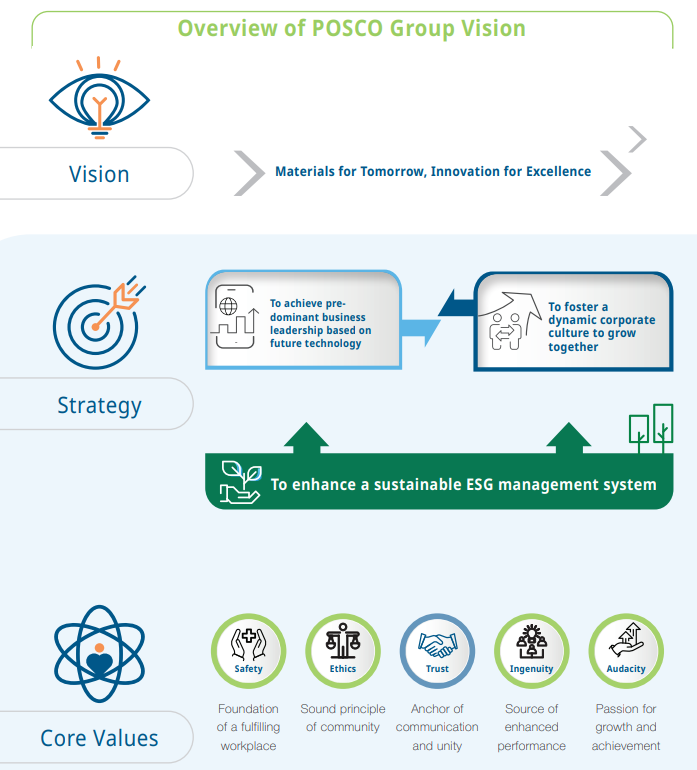
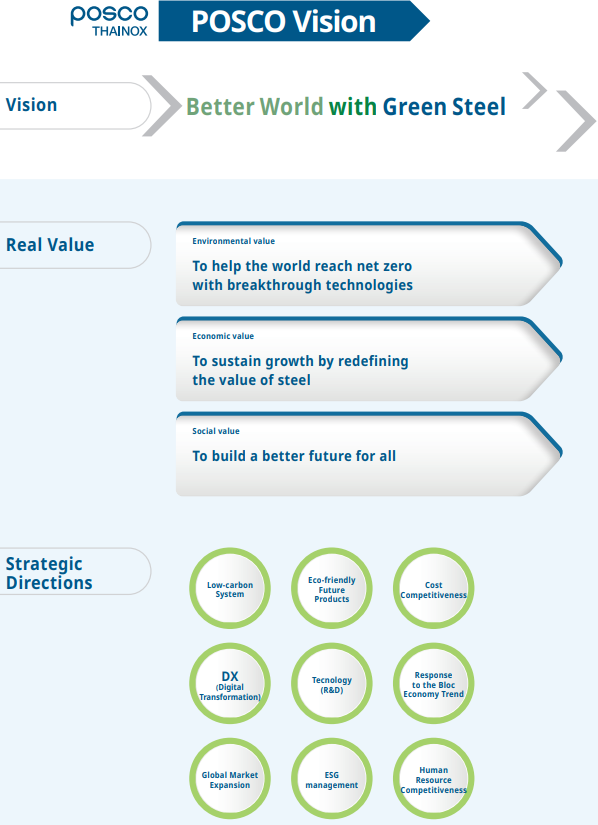
Vision
Materials for Tomorrow, Innovation for Excellence
Objectives
N/A
Goals
Offers high-quality products that meet market demands
Providing excellent service and support to customers
Conducting business with sustainable economic values
Maximizing value for shareholders
Taking responsibility for the sustainable development of society
Business Strategies
To achieve predominant business leadership based on future technology
To foster a dynamic corporate culture to grow together
To enhance a sustainable ESG management system
Other Information
| Name | Description |
|---|---|
| Vision Diagram |
|
Material Changes & Developments
Material Changes & Developments
| Year | Description | ||||
|---|---|---|---|---|---|
| 1,990 | Thainox Stainless Public Company Limited (formerly Thainox Steel Company Limited) was established on July 30, 1990, as a joint venture between (1) the Mahagitsiri family, (2) a Japanese stainless steel producer group, (3) the Ilva SPA Group, and (4) the Arcelor Group which was the world's largest producer of steel and stainless steel (formerly the USINOR and Ugine Groups). | ||||
| 1,992 | Started construction of a stainless-steel factory on an area of 125 rai, located in Rayong Industrial Park, Mapkha Sub-District, Nikhom Phatthana District, Rayong Province. The factory was located in the industrial area of the east coast. | ||||
| 1,993 | Phase I of the stainless-steel factory construction was completed with a capacity of 60,000 metric tons per annum. It could commence commercial operation in November. | ||||
| 1,996 | The Company started the factory construction on Phase II to expand the production capacity to 160, 000 tons per year with a step-by-step increase. | ||||
| 1,997 |
| ||||
| 1,998 | The Company installed a bright annealing line process, allowing it to conduct the production of products in a more complete process. | ||||
| 1,999 |
| ||||
| 2,000 | The Company received ISO 14001, a standard certification mark for environmental management system. | ||||
| 2,001 |
| ||||
| 2,002 |
| ||||
| 2,003 |
| ||||
| 2,004 |
| ||||
| 2,005 |
| ||||
| 2,006 |
| ||||
| 2,007 |
| ||||
| 2,008 | The Company started testing production in the 3rd Sendzimir Cold-Rolling Mill, with the project to expand the production capacity of cold-rolled stainless steel to 300,000 tons per year. | ||||
| 2,009 |
| ||||
| 2,010 | The Company's Phase 3 expansion project was able to go ahead as it was not constitutionally classified as a project or activity with a "severe" health impact. | ||||
| 2,011 |
| ||||
| 2,012 |
| ||||
| 2,013 |
| ||||
| 2,014 | The Company organized a major overhaul of the production control system in the entire APF (cleaning and sterilized by heat) system, which has a great effect on the quality control system and product reliability | ||||
| 2,016 |
| ||||
| 2,017 |
| ||||
| 2,018 |
| ||||
| 2,019 |
| ||||
| 2,020 | According to the corporate citizenship project, "Corporate Citizenship," the Company had a project to donate furniture made from the Company's products to schools in need and received cooperation from business partners, namely, Stainless Houseware Industry Company Limited, which produced dining table sets with seats, and Thai Stainless-Steel Company Limited, which helped produce food trays free of charge.
In addition, the Company organized a design contest for benches made of stainless steel under the project name POSCO-Thainox Design Award 2020 to promote the creativity of young designers, giving students the opportunity to design stainless steel furniture for public use. A total of 26 students from 12 leading universities across all regions of Thailand were interested in submitting their works to the contest. On August 28, 2020, the Company held an award ceremony for the contest winners. It was a prize worth 285,000 baht. The winning works of the Company were used to produce stainless steel benches for public use. On December 2, 2020, the Company delivered 50 3-seat stainless steel benches worth 2,800,000 baht to Police General Asawin Kwanmuang, Governor of Bangkok, for the benefit of people who use the service in the Wachirabenchathat Park area (Rot Fai Park). | ||||
| 2,021 |
| ||||
| 2,022 |
| ||||
| 2,023 |
| ||||
| 2,024 | POSCO-Thainox PCL recognizes the importance of Environmental, Social, and Governance factors on operational legitimacy and long-term value creation. In Meeting of Board of Directors No. 5/2024, On November 8, 2024, an ESG Committee was appointed to oversee and manage ESG-related issues. The committee is dedicated to aligning operations with the company's values and the long-term interests of stakeholders. | ||||
| 2,025 | On September 17, 2025, the company earned the Outstanding Industry Award for the year 2025 in the Circular Economy category under the project to expand the cold-rolled stainless steel sheet production plant from the Office of Natural Resources and Environmental Policy and Planning, under the concept of EIA NEXT STEP: The Next Sustainable Growth, moving forward for EIA towards sustainability. |
Use of Proceeds from Securities Offerings
Is There Money Raised from a Securities Offering Still to Report On?
No
Commitments Made in the Registration Statement
Are There Commitments or Conditions from an Offering or Listing?
No
Group Operating-Structure Policy
Description
The Company has invested in the Company NS-Thainox Auto Company Limited (NS-Thainox Auto), which is a joint venture between the Company and NIPPON STEEL CORPORATION and Siam Lotus Company Limited (Siam Lotus). The objective of the business is to market, sell, and distribute stainless steel products of the Company for use in the automotive and motorcycle industries in Thailand, with the shareholding structure as follows:
The principles of appointing the board of directors of NS-Thailand Auto Co., Ltd. ("Joint Company") are as follows:
The Joint Company's board of directors shall be elected by a general meeting of shareholders.
The board of directors shall consist of 5 directors, with 2 directors appointed by a majority vote of Group A shareholders and 3 directors appointed by a majority vote of Group B shareholders.
The board of directors shall select one director appointed by a majority vote of Group A shareholders to be the chairman and one director appointed by a majority vote of Group B shareholders to be the managing director.
The Joint Company, as a member of Group A shareholders, has nominated 2 persons to be directors, with 1 of the 2 nominated persons being the chairman of the board of directors, Mr. Seon Yeol Lee, and the other person being a director, Mr. Jaesung Yoon.
Companies Where the Company Holds ≥10%
Companies (≥10% Holding)
| Company Name | Address | Province | Zip Code | Telephone | Business Type | Security Type | Shares | Paid-up Shares |
|---|---|---|---|---|---|---|---|---|
| NS-Thainox Auto Company Limited | 1 MD Tower 20th Floor, Bang Na-Trat 25 Alley, Bang Na-Trat Road Km.25, Bang Na Nuea, Bang Na | Bangkok | 10260 | 02-744-0340 | Marketing and distribution of cold-rolled stainless steel products for use in the automotive industry, etc. | Common shares | 489,996 | 489,996 |
Income Structure
Product / Service Income
| Category | Description | This Year | This Year % | Last Year | Last Year % | 2 Years Ago | 2 Years Ago % |
|---|---|---|---|---|---|---|---|
| Total revenue from operations | Total revenue from operations | 13,250,716 | 100 | 14,379,173 | 100 | 14,067,414 | 100 |
| stainless | 13,066,930 | 98.61 | 14,223,229 | 98.92 | 13,984,666 | 99.41 | |
| Other | Other | 183,786 | 1.39 | 155,944 | 1.08 | 82,748 | 0.59 |
Export Income
| Category | Description | This Year | This Year % | Last Year | Last Year % | 2 Years Ago | 2 Years Ago % |
|---|---|---|---|---|---|---|---|
| Total revenue | Total revenue from operations | 13,250,716 | 100 | 14,379,173 | 100 | 14,067,414 | 100 |
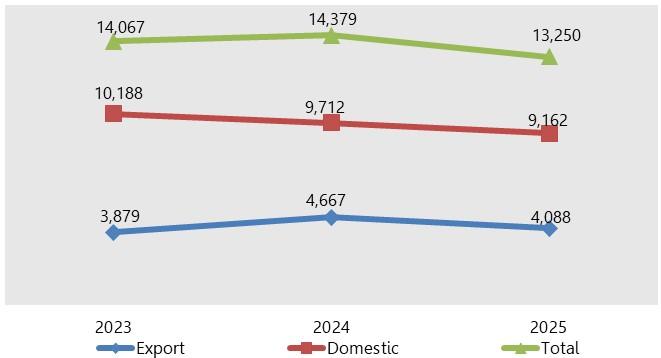
| Domestic | Domestic | 9,162,489 | 69.15 | 9,712,147 | 67.54 | 10,188,188 | 72.42 |
| International | International | 4,088,227 | 30.85 | 4,667,026 | 32.46 | 3,879,226 | 27.58 |
Other Income
| Operating Other Income | Non-Operating Other Income | Share of Profit |
|---|---|---|
| 1710 · As of year: 92478.0 · Description: Total other income · As of yesteryear: 158424.0 · As of year before yesteryear: 55477.0 · 1711 · As of year: 31471.0 · Description: Other income from operations · As of yesteryear: 85751.0 · As of year before yesteryear: 23923.0 | 1712 · As of year: 61007.0 · Description: Other income not from operations · As of yesteryear: 72673.0 · As of year before yesteryear: 31554.0 | 1713 · As of year: 1252.0 · Description: Share of profit · As of yesteryear: 2136.0 · As of year before yesteryear: -41.0 |
Product / Service Characteristics
Business Type
3114
Business Groups
| Business Group | Description | ||||
|---|---|---|---|---|---|
| Cold Rolled Stainless Steel | Product Model The Company produces and distribute various grades of cold-rolled stainless* steel in the form of sheets, coils, and strips. By dividing the main products of the Company according to the microstructure, the Company's products can be divided into 2 main types, namely, (1) Cold Rolled Austenitic Stainless Steel and (2) Cold Rolled Ferritic Stainless Steel. Both of these types of stainless steel are the most commonly used, accounting for about 90 percent of all stainless steels currently in use. The cold-rolled stainless steel of the Company will have a thickness of 0.30 mm to 3.00 mm and a width of 30 mm to 1,265 mm. *Stainless steel is a general term used to refer to steel in a group that has resistance to corrosion. This is generally true for steel containing chromium, at least 10.5 percent of which will act to create a protective film that resembles a corrosion-resistant shield to prevent the steel surface from reacting with oxygen in the air to form an oxide film on the metal surface and causing the steel surface to corrode, or known as rust. Cold-Rolled Austenitic Stainless Steel Cold-Rolled Austenitic Stainless Steel is the most widely used stainless steel around the world because it is highly corrosion resistant, flexible, non-magnetic, easy to clean, and hygienic in all applications by heat, cold, and sudden temperature changes. Therefore, this type of stainless steel is used in many industries. Austenitic stainless steel contains 1–14 percent of nickel and 16–25 percent of chromium. This is because austenitic stainless steel is more durable and resistant to corrosion than ferritic stainless steel. Therefore, more than 70 percent of the stainless steel used in Asia is austenitic stainless steel. The Company produces cold-rolled austenitic stainless-steel grades 304, 304 L, and 316 L, divided by surface into 4 types:
Incidentally, cold-rolled austenitic stainless steels are more expensive than cold-rolled ferritic stainless steels due to their higher cost and more volatile nickel. The Company produced cold-rolled austenitic stainless steels, accounting for approximately 61 percent of total cold-rolled stainless steels produced in 2024. Cold-Rolled Ferritic Stainless Steel Cold-Rolled Ferritic Stainless Steel is the nickel-free stainless steel and, therefore, have moderate corrosion resistance properties, low carbon, 16–18 percent of chromium, and magnetic properties. The Company produces cold-rolled ferritic stainless-steel grades 409, 430, and 439, divided by surface into 4 types:
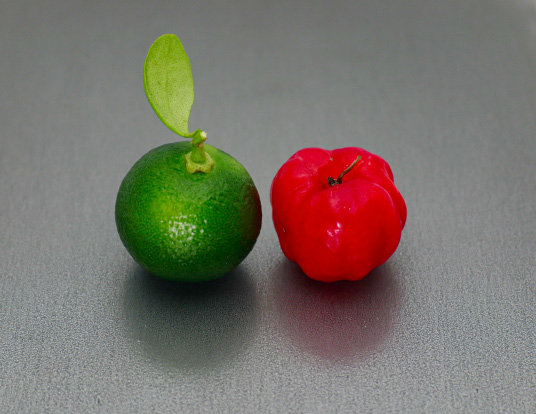
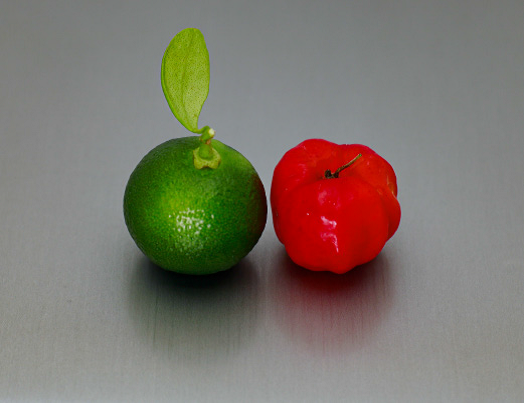
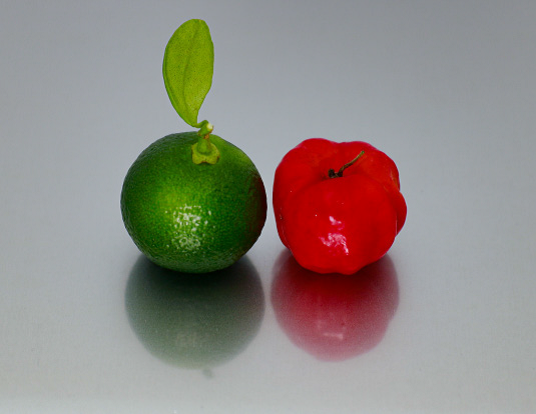
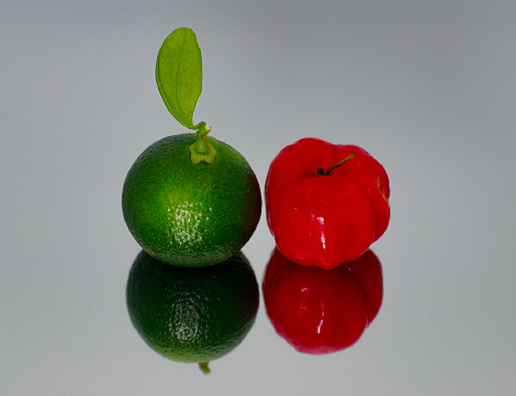
The Company produced cold-rolled ferritic stainless steels, accounting for approximately 39 percent of total cold-rolled stainless steels produced in 2024. The main feature that differentiates cold-rolled austenitic stainless steel from cold-rolled ferritic stainless steel is that cold-rolled austenitic stainless steel is able to stretch better. This results in better forming properties than ferritic cold-rolled stainless steel. Therefore, it is suitable for manufacturing equipment requiring high cold-forming properties, such as cutlery, kitchen utensils, cooking utensils, sinks, pipes, etc. In addition, cold-rolled austenitic stainless steel has better corrosion resistance than cold-rolled ferritic stainless steel. At the same time, cold-rolled ferritic stainless steel is used in applications where deep drawing is not required and where high corrosion resistance is not required. In addition to the features that are different, austenitic stainless steel is more expensive and volatile than cold-rolled ferritic stainless steel because austenitic stainless steel also contains nickel, which is expensive and its price volatility is quite high. The following figure shows examples of the Company's products in various forms. Surface Characteristics of Different Stainless-Steel Types
|
Research & Development
Has R&D Policy (Y/N)
No
R&D Cost — Description
Research and Development
The Company has received various technological supports by receiving the knowledge and expertise in production from major shareholder, POSCO (Korea), which is the world's top steel manufacturer, from the experiences of the global manufacturer. Therefore, executives and employees of the Company are very confident in producing quality cold-rolled stainless steel according to the needs of a wider variety of customers.
The Company's executives have realized the importance of product quality with production control departments as follows:
A. Production Process Control Department
The production process control department is the department responsible for studying, improving, and developing production processes to make the production process most efficient at a low cost. Its duties are to design, monitor, and control the production process to meet the requirements of standard conditions, including analyzing and providing feedback to the factory department in order to obtain stable quality products that meet the standards and needs of customers.
B. Product Quality Assurance Department
The product quality assurance department is responsible for inspecting and controlling the raw materials quality of products in the production process and finished products of the Company in order to ensure that the Company's products meet the requirements of customers. In addition, the product quality assurance department also sets standards for imported hot-rolled stainless steel. It also serves to claim damages in the event that the raw materials do not meet the requirements.
C. Technical Research & Development Center
The research and development center are the department that focuses on research and development of the quality of the Company's products. The research and development aim to study various processes to solve the problems of product manufacturing, customer return issues, wastewater quality problem, and raw material quality. It supports research and develops the production process, including the development of new-grade products by simulating and testing in the production process together with the production control department. This is to increase efficiency and reduce production costs. It is also responsible for promoting and planning the development of the use of stainless steel in various forms to increase both in current and new markets continuously by providing technical training to customers and helping customers solve various application problems.
D. Technical Customer Service
In addition, the Company also has a technical service department for customers which is responsible for setting standards for the Company's products, giving suggestions, providing technical advice to customers, encouraging customers to use the product worthwhile, leading to maximum satisfaction in products and services, investigating customer complaints to analyze and diagnose the damage caused to the customers quickly and fairly, acknowledging the needs of the customer, summarizing assessment, and giving suggestions to relevant departments in order to develop product quality to meet the needs of customers.
In addition to the above tasks, the research and development center has studied the quality of the products of the Company and other manufacturers to improve the quality of the Company's products. It mostly focuses on in-depth studies with the factory and customers. This includes testing laboratories that testes product properties to meet standards and/or meet customer needs under the management of testing laboratories for testing quality assurance and test results to be in accordance with the standard of ISO/IEC 17025:2005.
In addition to study and research, the Company itself also has research collaboration with universities and well-known educational institutions both domestically and internationally. The Company supports the research of cold-rolled stainless products for many projects. In addition, the Company has also supported students and researchers in metallurgy and focused on coordinating and collaborating more with the research center of POSCO (Korea) to pass on knowledge and production standards so that the customers of the Company continuously receive the best products.
R&D Cost — Label
Research and development (R&D) expenses over the past 3 years (Million Baht)
R&D Cost — This Year
0.0
R&D Cost — Last Year
0.0
R&D Cost — 2 Years Ago
0.0
Assets Used in the Business
Permanent Assets — Description
Factory, Equipment, and Machinery
The Company's cold-rolled stainless-steel factory located in Rayong Industrial Park Industrial Estate, in the eastern coastal industrial area, about 180 kilometers to the southeast, with a total area of 130 rai (208,000 square meters), consists of modern machinery and equipment in technology. In addition, the Company has also installed a quality testing system in every step of production thoroughly by engineers, technicians, and experts to ensure that the Company's products are of high quality and have won the credibility and trust of customers. The Company's products have quality according to international standards of JIS, AISI, and Euro norm. The laboratory is fully equipped with quality inspection equipment, both mechanical and computer inspection or structural analysis cameras to ensure and comply with the highest international standard quality control system. It allows the factory and the stainless-steel production process of the Company to be modern and has better performance than foreign stainless-steel manufacturers in many companies aboard. Our factory is also certified by various international standards related to important production.
The factory started manufacturing cold-rolled stainless steel in 1993, and currently has a production capacity approximately of 200,000 tons of cold-rolled stainless steel per year. In 2007, the Company invested in the installation of a 3rd cold-rolling machine (Sendzimir Line), and later installed additional batch annealing furnaces for a total of 3 furnaces to adjust the quality of stainless steel before going into the cold-rolling process which can support rolling up to 300,000 tons per year. The Company’s factory is a cold-rolled stainless-steel factory that imports hot-rolled stainless-steel coils from abroad to be rolled and reduced the size to obtain the thickness and surface required by the customers.
Machinery and main equipment for the manufacturing of cold-rolled stainless steel of the Company are the modern and widely used equipment in all major cold-rolled stainless-steel manufacturers around the world which consists of the followings:
Batch annealing furnace for ferritic grades
Annealing and pickling line with a length of 280 meters for hot-rolled and cold-rolled stainless-steel coils
Annealing and pickling for raw material with a length of 305 meters for hot-rolled stainless-steel coils
Annealing furnace for a shiny surface finish, Sendzimir Cold-Rolling Mills (ZRM1 and ZRM2) with the speed rate of 600 and 800 meters per minute, respectively, and in 2008, Sendzimir Cold-Rolling Mill (ZRM3) with the speed rate of 800 meters per minute has been commissioned
Skin pass mill to smooth the steel surface
Skin pass mill No. 2 to smooth the steel surface
Tension leveler to smooth the steel surface
Grinding line to repair the surface
Slitting line No. 2 for slit edges and wide sheets
Cut-to-length line to cut into sheets
Slitting line No. 1 for slit edges and narrow sheets
In addition, the Company has a cold-rolled stainless steel service center (AMATA), the 2nd stainless steel slitting factory that the Company has purchased from a company in Amata Nakorn Industrial Estate, Chonburi Province, with a total area of 9-3-65.9 rai to provide another channel for customer service for both the services of slitting and cutting cold-rolled stainless steel sheets for special needs with all types of grade, size, thickness, surface, and quantity required by the customers.
Intangible Assets — Description
Passing on and Supporting of Technology from the World's Major Steel Manufacturers
In the past, the Aperam Group (previously known as “Arcelor”), which is the group that co-founded the Company and is one of the world's largest manufacturers of steel and stainless steel, has been passing on and supporting modern and effective production technology to the Company all along. The Company, executives, and employees have been passed on the knowledge, technology, and expertise in the production and distribution of cold-rolled stainless steel from Arcelor Group for more than 10 years. This has resulted in the Company being capable of manufacturing high quality cold-rolled stainless steel with a variety in product forms and a low cost. At present, POSCO (Korea), one of the world's largest steel manufacturers, has become a major shareholder in the Company and has the support of experts and new technologies to increase efficiency and make it even better one step further. It allows the Company to be more confident in the production process that is better because the Company will bring good experiences from two of the world's largest companies to support and develop the quality of work to reach the next highest point.
Has Subsidiaries Investment Policy (Y/N)
Yes
Subsidiaries Investment Policy — Description
NS-Thainox Auto Company Limited
The Company has invested in the NS-Thainox Auto Company Limited for 49%, which is a joint venture with NS-SL Company Limited and Siam Lotus Company Limited. It was registered for establishment in Thailand on July 17, 2006 and was not listed on the Stock Exchange of Thailand. Its objective is to conduct business, market, sell, and distribute products made from the Company's stainless steel for use in the production of automotive and motorcycles in Thailand.
For the accounting period ending December 31, 2025, the Company recognized share of profit in the consolidated financial statements according to the equity method in the amount of 1.252 million baht and presented the change in the book value of investments in associated companies as of December 31, 2025 in the amount 59.747 million baht.
Marketing Policy & Competition
Reporting Mode
3117
Marketing Policy (Overall)
The Company produces and distributes various grades of cold-rolled stainless steels in the form of coils, sheets, and strips, with cold-rolled stainless steel distributed both domestically and internationally. As for the domestic market, since the Company is the only cold-rolled stainless-steel producer in Thailand, it has the advantage of being able to deliver products quickly and on time compared to cold-rolled stainless-steel importers from foreign countries. As a result, the cost of the customer's inventory is reduced and the customer's risk from fluctuations in raw material prices on the world market is reduced compared to imports from other manufacturers outside the country, as well as the customer not having to bear the risk of exchange rates. The Company also has a policy to increase the proportion of cold-rolled stainless-steel sales in the country and to develop new grades of stainless steel to always meet the needs of consumers and reduce costs for manufacturers who use stainless steels as a raw material. The Company has continuously improved its production processes and customer service.
Domestic and International Sales Volume during 2023 – 2025 (Million Baht)
The Company's cold-rolled stainless steel production technology is one of the factors that the Company pays great attention to because it can help reduce production costs, increase work efficiency, and maintain a high level of product quality. The general steel production technology has a service life of more than 20 years. The production technology of the Company is extremely advanced compared to the production technology of foreign competitors, and the Company receives constant technical and skill support from POSCO (South Korea), which is the main shareholder of the Company at present.
The Company produces most of its products according to customer orders. It usually takes 10 to 15 days for each order to be manufactured, depending on the product types, sizes, and production schedule of the Company. However, in the production, the quality assurance department must inspect the product quality at each stage of production according to the Quality Control Plan by the international standard ISO 9001: 2008. The Company has a policy of accepting orders from customers and delivering the products to the customers within approximately 30 – 45 days, depending on raw materials, product types, and transportation distance.
At present, most of the Company's customers use the Company's products as raw materials for their products. Most customers of the Company are manufacturers of household equipment and appliances, manufacturers of pipes, manufacturers of industrial equipment and supplies, manufacturers of various construction equipment and materials, manufacturers of car exhaust pipes and equipment, etc. Apart from selling directly to users, the Company also sells to distributors (stockists) and service centers which will take the Company's products to add other values, such as modifying the size of the product or polishing it into various surfaces, for further distribution to users of cold-rolled stainless steels. This type of customer will serve their customers well.
The Company has 4 main distribution channels for cold-rolled stainless steel:
Direct Distribution to Domestic Customers
The Company distributes directly to domestic customers by having a sales and marketing team distributes products directly to entrepreneurs who have large businesses and large purchases of the Company's products. At present, the Company's main customers are manufacturers of stainless-steel kitchenware, stainless steel water tanks, stainless steel pipes, and automotive parts companies that use stainless steels as components, as well as customers who use stainless steels in the production of machinery, equipment in industrial plants, etc.
Distribution Through Local Distributors
At present, the Company has domestic distributors. These distributors are companies that have long-standing customer relationships and trade other metals in addition to the Company's products. In addition, these dealers normally have various major service centers that are affiliated entrepreneurs as well.
Direct Distribution to Overseas Customers
In many countries where customers have high purchasing power and can pay directly to the Company, the Company itself has developed business together with customers by having an export sales team to sell and expand markets for distribution directly to overseas customers to increase competitiveness and reduce sales costs.
Distribution Through POSCP Group's Overseas Network (South Korea)
The Company also uses the network of POSCO Group (South Korea), which is a major shareholder, to seek markets and provide additional sales services.
Industry & Competition (Overall)
The Global Stainless Steel Industry in 2025
The stainless steel industry is expected to continue growing, with increasing demand across various sectors. However, manufacturers face challenges from fluctuating raw material prices and intense competition from new producers in different regions. The development of sustainable products and the adoption of advanced technologies will be key to maintaining competitiveness, helping to enhance production efficiency and reduce costs.
Production Volume: China continues to be the main producer, holding more than 50% of the global market share, while India and Indonesia are rapidly expanding their production capacity.
Price: The prices of cold-rolled stainless steel are highly volatile due to the costs of raw materials (nickel, chromium) and energy costs
Trade tensions and protective measures: The imposition of tariffs between countries that produce stainless steel, such as the United States and China, has led to an increase in stainless steel prices and reduced the competitiveness of producers in the countries that are subjected to the tariffs.
In 2025, competition in Thailand's stainless steel industry is expected to intensify due to several factors, including domestic demand and pressure from international markets.
Overview of Competition
Increased Domestic Demand: There is a growing demand, particularly from the construction and infrastructure sectors, providing opportunities for stainless steel manufacturers to expand their production capacity.
Pressure from Imports: The influx of steel and stainless steel from China remains high due to competitive pricing and significant export volumes. This situation forces Thai manufacturers to adjust their pricing and quality strategies.
Expansion into International Markets: There are efforts to increase exports to new markets such as ASEAN, the Middle East, and Africa to diversify risks from domestic market competition.
Key Competitive Strategies for 2026
Enhancing Product Value: Focus on designing and producing stainless steel with special properties, such as high corrosion resistance, lightweight, or aesthetic appeal for decorative applications.
Investing in Innovation and Digitalization: Utilize ERP systems, AI for production analysis, and predictive maintenance to improve efficiency.
Building Industry Collaborations: Form alliances among manufacturers and distributor for joint marketing efforts.
Emphasizing Sustainability: Reduce energy consumption and waste to align with environmental standards and meet the demands of customers in the global market.
Procurement of Products & Services
Reporting Mode
3117
Procurement (Overall)
General Information
The Company is the only cold-rolled stainless-steel manufacturer in Thailand. The products of other steel manufacturers in the country are carbon steel which is totally different from the Company's products in both the application markets and the target customer groups.
The modern production process allows the Company's cold-rolled stainless steel to have excellent corrosion resistance, a beautiful, smooth, and even surface as well as the same thickness throughout the sheet. The Company's cold-rolled stainless steel has many grades to select according to the demand and suitability of the customer's application. The Company provides technical assistance in order to select the products to meet the needs of customers as much as possible.
The Company's cold-rolled stainless steel is manufactured from selected raw materials with modern production technology. The Company's products have been certified for the production process by ISO 9001:2008 international standards. The cold-rolled stainless steel has been produced in accordance with international standards such as Japan Industrial Standards (JIS), American Society for Testing and Materials (ASTM), European Standards (EN), and Thai Industrial Standards (TIS).
The following table shows the Company’s various grades of cold-rolled stainless steel as well as their details, applications, and properties.
General Properties and Applications of Products
Austenitic Products | Properties | Application | ||
Grade | Surface Finish | Thickness | ||
301 | 2D,2B | 0.3 – 3.0 | High strength | Seat belts Coil springs |
BA | 0.3 – 1.6 | |||
304 | 2D,2B | 0.3 – 3.0 | Corrosion resistance, very good formability and weldability, and easy to clean | Home appliances Water tanks Construction Transportation |
BA | 0.3 – 1.6 | |||
304L | 2D,2B | 0.3 – 3.0 | Very good corrosion resistance, sensitization resistance, and good weldability | Tubes Cavity containers Home appliances |
BA | 0.3 – 1.6 | |||
316 | 2D,2B | 0.3 – 3.0 | Excellent corrosion resistance, especially the pinholes, and strong at high temperatures when molybdenum added | Food production industry Boilers Heat exchangers |
BA | 0.3 – 1.6 | |||
316L | 2D,2B | 0.3 – 3.0 | Low carbon, allowing it to be more resistant to intergranular corrosion than grade 316 | Chemicals industry Large tanks Hot water tanks |
BA | 0.3 – 1.6 | |||
321 | 2D,2B | 0.3 – 3.0 | Titanium added, allowing it to be more resistant to intergranular corrosion | Heat exchangers |
BA | 0.3 – 1.6 | |||
304J1 | 2D,2B | 0.3 – 3.0 | Formability improved by adding copper | Used in works requiring deep formability |
BA | 0.3 – 1.6 | |||
Production Procedures
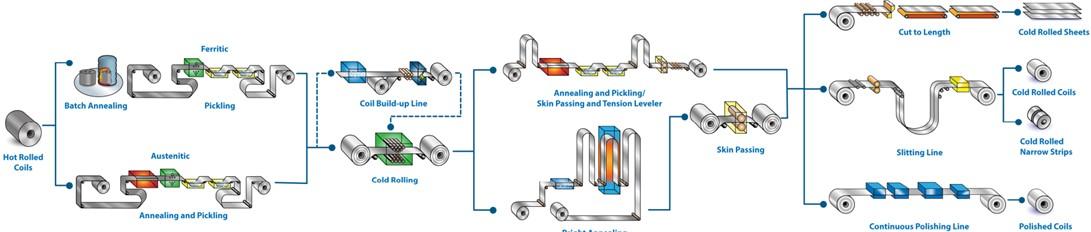
The production process of the Company starts with bringing raw materials (hot-rolled stainless coils) to be cold-rolled, which the Company will import from overseas manufacturers. The hot-rolled stainless-steel coils are produced from stainless steel scraps which are fused with a mixture in an electric arc furnace. Then, it will go through a process that purifies liquid metal by vacuum. The purified metal will be continuously cast to obtain steel ingots. The aforementioned flat steel ingots will be hot-rolled to reduce the size into the steel coils. The Company will import hot-rolled stainless coils from manufacturers such as POSCO (South Korea), Nippon Steel, and Arcelor. All of the raw material suppliers to the Company are the world's largest manufacturers of hot-rolled stainless-steel coils, and POSCO (South Korea) and Nippon Steel are also shareholders of the Company.
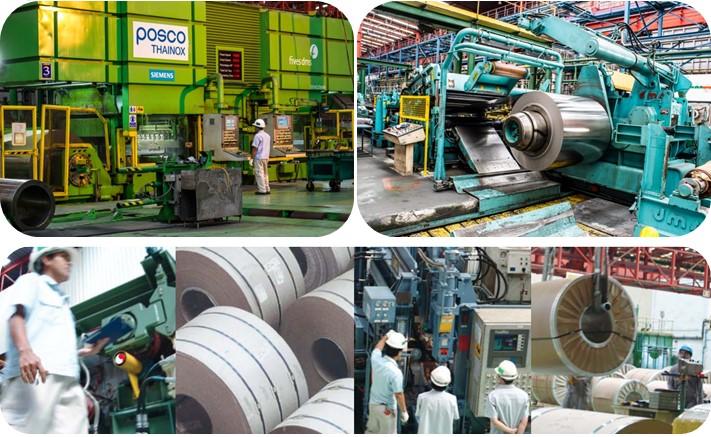
The Company will bring hot-rolled stainless-steel coils pass through a heat treatment process and acid etching. Then, they will be rolled to reduce the size by the Sendzimir Cold-Rolling Mill and baked, acid etched, or through the process of bright annealing with a skin pass again to adjust the surface finishes to meet the needs of customers. The Company's cold-rolled stainless steel production process is as follows:
a. Annealing Process and Removal of Oxides (Pickling)
The ferritic hot-rolled stainless-steel coils are fed into the batch annealing furnace, where the temperature inside the machine is about 850 degrees Celsius, to anneal the hot-rolled stainless-steel coils to be soft and have a complete structure. After the hot-rolled stainless-steel coils have been put through the annealing process, there will be an oxidation reaction on the surface, which will be eliminated in the oxide process. The annealed hot-rolled stainless-steel coil will be passed through an oxide removal bath which contains a mixture of sulfuric acid, hydrofluoric acid, and nitric acid, respectively. For hot-rolled austenitic stainless-steel coils, it is not necessary to be put into a batch annealing furnace but can be brought directly into the process of annealing and pickling.
b. Cold-Rolling Process
Annealed and deoxidized steel will be passed through the Sendzimir Unit for size reduction. The Sendzimir Unit consists of 20 cylindrical rolling balls which force, compress, and roll the stainless steel to be thinner. The thickness of stainless steel will decrease after this process.
c. Surface Finishes Adjusting and Smoothing Process (Skin Passing)
As the smoothness of stainless steel after the 2nd annealing and de-oxide treatment is not suitable for use, the aforementioned stainless-steel sheets must be re-rolled through the surface treatment process to increase the smoothness and shine of the surface.
d. Slitting and Cutting Process
The final process of production is to unroll cold-rolled stainless steel to be cut into sheets according to the size required by the customer, which the finished product is called a cold-rolled stainless-steel sheet; or cut the stainless steel to the specified length and roll back, which the finished product is called a cold-rolled stainless-steel coil or a narrow cold-rolled stainless-steel coil, before delivering to the customers.
Sendzimir Cold-Rolling Mill and Skin Pass Mill for Steels
Production Process of Hot-Rolled Stainless-Steel Coils or Black Coils
 Stainless Steel Production Process of POSCO-Thainox Public Company Limited
Raw Material Acquisition (Overall)
The Company imports 100% of raw materials, which are hot-rolled stainless steels, from hot-rolled stainless-steel manufacturers that are the world's largest manufacturers, namely:
POSCO Group (South Korea), which is currently the Company's major shareholder. Most of the Company’s purchases are from this group.
Other business groups such as Nippon Steel Stainless Steel Corporation (the Company's shareholder from Japan), and some from China and Indonesia
The price of the Company's raw materials (hot-rolled austenitic stainless steel) fluctuates according to the price of nickel which is a commodity product.
Production Policy (Overall)
The company's stainless steel production process has a total production capacity of 300,000 tons. The company has utilized 187,257 tons of this capacity, which accounts for 62% of the total production capacity.
Production Capacity (Overall)
| Item | Unit | Used | Capacity |
|---|---|---|---|
| Stainless Steel Production | Ton | 62 | 300,000 |
Domestic/Overseas Purchase Proportion (Overall)
| Raw Material | Source Country | Value |
|---|---|---|
| Hot Rolled Stainless Steel | South Korea | 1,261,203,425 |
Projects Under Construction
Has Projects Under Construction (Y/N)
No
Debentures & Bills of Exchange
Has Debentures (Y/N)
No
Convertible Securities
Has Convertible Securities (Y/N)
No